
Hiking the Transcaucasian Trail in Georgia
Overview
This post shares what it’s really like to hike sections of the Transcaucasian Trail in Georgia, based on four weeks of backpacking through Svaneti, Tusheti, and Khevsureti in July and August. You’ll find an honest look at route conditions, navigation, camping, resupply, permits, challenges, and highlights—along with personal reflections from one of the wildest long-distance hiking experiences I’ve had. If you’re researching long-distance hiking in Georgia or wondering whether the Transcaucasian Trail is right for you, this guide will give you a realistic picture of what to expect.
Intro
The Transcaucasian Trail (TCT) isn’t just another long-distance route — it’s an evolving, world-class hiking project spanning the dramatic mountains of the South Caucasus. When completed, the trail will cover more than 3,000 km across the Greater and Lesser Caucasus Mountains, linking roughly two dozen national parks, protected areas, and remote communities in Georgia, Armenia, and Azerbaijan.
In the summer of 2025, I spent about four weeks hiking key sections (and even scouting a couple of new ones) of the trail through Svaneti, Tusheti, and Khevsureti. Over that month, my hiking partners and I moved in stages, interspersing rugged ridgelines and cross-country route-finding with historic villages, guesthouses, and breathtaking high passes and alpine meadows. We followed GPX tracks from the TCT Association and Trekking the Caucasus, navigating unmarked terrain with a mix of GPS, satellite maps, and old-school route finding.
This part of the TCT is still in development — marked more by the terrain itself than by painted blazes — but that raw, unfiltered experience is exactly what makes it so unforgettable. If you’re researching long-distance hiking in Georgia or hoping to understand what it’s really like to walk part of one of the world’s most ambitious new trails, this guide will give you a grounded, on-the-trail look at the beauty, challenges, logistics, and lessons learned from my Transcaucasian Trail journey.
Castle
The Trail and Vision of the TCT Association
The Transcaucasian Trail (TCT) is not simply a route through the mountains — it’s an ambitious long-distance hiking project with a clear vision and philosophy: to build a world-class trail network that follows both the Greater and Lesser Caucasus Mountains, connects cultural and ecological landscapes, and brings lasting benefits to local communities and the environment. The idea is to link roughly two dozen national parks and protected areas across Georgia, Armenia, and Azerbaijan, creating a continuous, sustainably maintained trail that hikers from all over the world can explore while supporting conservation and sustainable tourism.
Because the trail is still under active development — with some sections well-established and others only beginning to take shape — the TCT experience varies widely. Some parts are hikeable on established paths, while others require confident navigation through unmarked terrain or connections across historical pass routes. This mix of developed and off-trail sections is part of the trail’s character, and encourages hikers to prepare accordingly, understand local conditions, and respect the region’s complex geography and heritage.
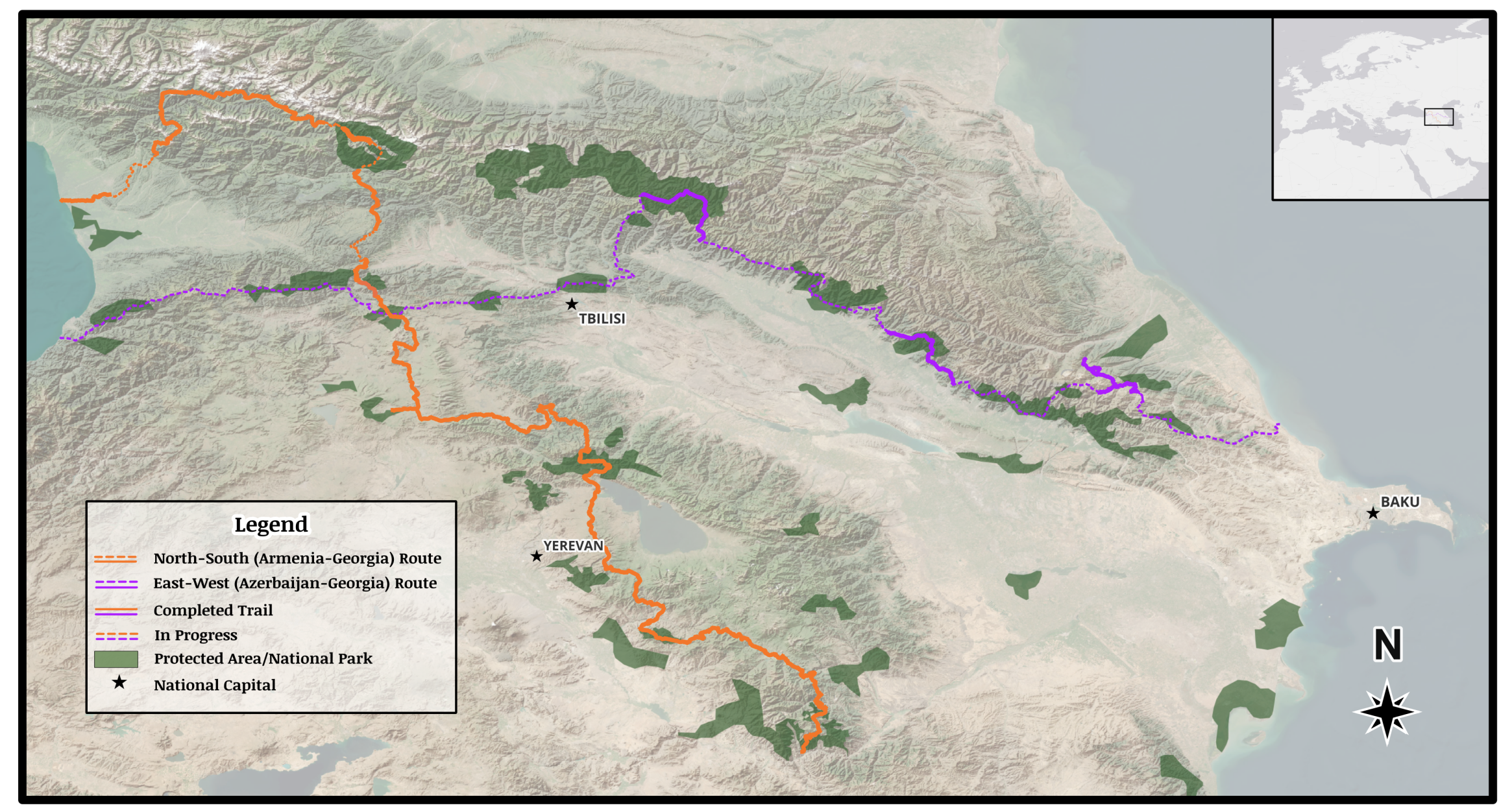
Image from Transcaucasian Trail Association
🗺 Route Overview
📍 Svaneti: Wild Lakes & Towering History
We started in Svaneti, a region that felt like something out of a storybook—complete with medieval stone towers, alpine valleys, and vast views of the Caucasus. One of the highlights was Lake Tobavarchkhili a stunning, isolated glacial lake that took a bit of bushwhacking (and dodging giant hogweed) to reach. The trail around Khaishi was rough and often nonexistent, but the solitude and raw nature made it unforgettable.
Lake Tobavarchkhili
📍 Tusheti: From Gremi to Omalo to Shatili
One of the most unique stretches was hiking from Omalo to Shatili, a route that required us to check in with the Georgian border patrol and get a five-day permit to travel through the military zone. We showed our passports, were logged in a paper ledger, and sent on our way. Some of the most incredible huts on the trail are being built in this region—stunning wood-built refuges surrounded by total silence. New trails are also under construction, which leads me to believe this section of hiking is only going to get more popular in the coming years.
Green Lake, the smallest of the Abudelauri Lakes
📍 Khevsureti: Fortress Villages & High Mountain Passes
Khevsureti is one of Georgia’s most remote and captivating mountain regions, nestled high in the Greater Caucasus and known for its dramatic scenery, deep gorges, and ancient stone fortress villages. This historic-ethnographic area is famous for places like Shatili, a fortified village built into the mountainside, and Mutso, an even more dramatic cliff-perched settlement that feels frozen in time.
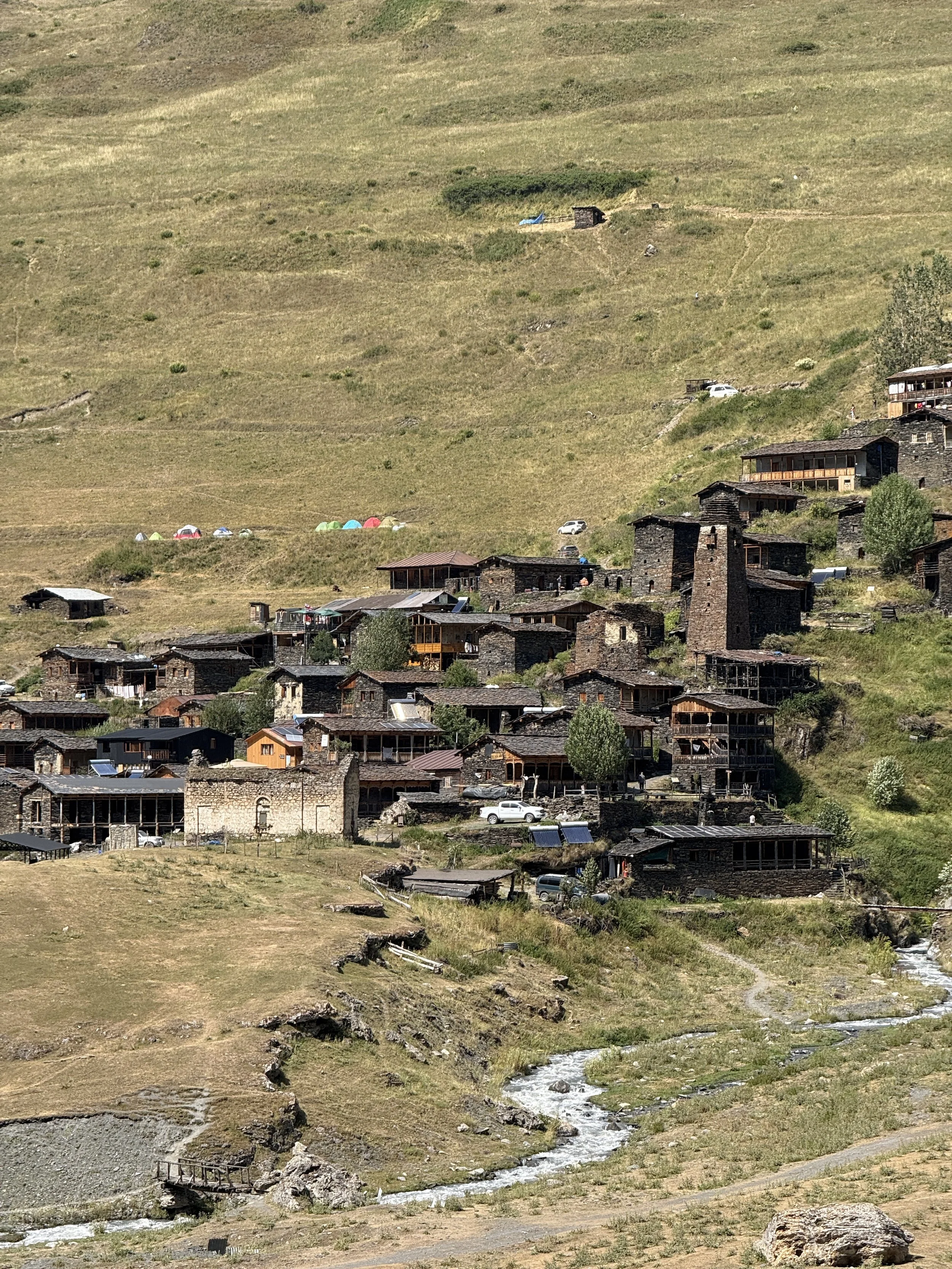
Stone Towers of Dartlo
The region is divided into Piraketa (Lower Khevsureti) and Pirikita (Upper Khevsureti), and is generally accessible only in summer via high mountain passes. Along the trail we crossed the nearby Abudelauri Lakes, known for their striking blue, green, and white waters before we walked into Juta.
Culturally, Khevsureti retains a strong sense of tradition—distinctive music, clothing, and mountain hospitality blend with centuries-old rituals and history, making this section of the Transcaucasian Trail feel like both a wilderness adventure and a deep cultural journey.
Wild Camping
🌟 Trail Highlights
What makes the Transcaucasian Trail in Georgia so unforgettable isn’t just the rugged terrain—it’s the quiet moments of magic scattered along the way. These were some of the standout highlights from my month on trail:
Lake Tobavarchkhili, Svaneti
Hidden high in the mountains, this remote glacial lake was one of the most beautiful—and least visited—places we hiked to. Reaching it required some serious bushwhacking and determination, but swimming in its still, reflective surface felt like a reward few get to experience.The Stone Towers of Mestia
Walking through Mestia felt like stepping into a time capsule. The stone defense towers that dot the village are iconic for a reason as they’re a tangible link to Georgia’s ancient highland culture. Make sure to leave time for the town’s feature film “Dede” at the local theatre.Wildflower-Covered Mountainsides
In Svaneti, I crossed mountains carpeted in color. Every day in July brought fresh blooms of alpine gentians and meadows glowing yellow, pink, and purple.Guesthouse Hospitality
In the villages we passed through, we were well-fed. Fresh-baked bread, homemade cheese, and shared stories at long tables became some of the warmest memories of the trip.New Huts Near Juta
Between Omalo and Juta, we encountered several new mountain huts under construction—beautiful, minimalist wooden refuges tucked into the high alpine. They felt like a glimpse into the future of the trail, with just enough comfort while still preserving the wild feeling of the Caucasus.
⚠️ Challenges on the Trail
This trail is not for the faint of heart—or for those expecting well-marked paths and frequent signs. That’s part of what makes it so special, but it also means being prepared for some serious Type 2 fun.
Bushwhacking and Overgrowth
In Svaneti, particularly around the Khaishi region, the trail vanished into overgrowth. We were forced to push through thick brush, duck under branches, and carefully avoid the giant hogweed, which can cause skin burns with sun exposure.Trail Gaps & Missing Segments
The TCT is still a work in progress. Some sections don’t exist yet in any formal sense—just a line on a map and a vague sense of where you should be heading. At times, we relied on GPS, satellite view, and intuition to navigate.Limited Water on Ridges
In Tusheti and Khevsureti, we found ourselves carrying more water than expected—some ridge stretches went half a day or more without reliable sources, especially late in the season.Flies & Biting Insects
Svaneti in mid-summer brought the full swarm: mosquitoes, horseflies, and aggressive black flies. Long sleeves, a head net, and a lot of patience are recommended.Unpredictable Weather
In July and August, we encountered several thunderstorms, heavy winds, and rain that rolled in quickly. We always camped with an eye on our surroundings and occasionally adjusted our route or timing to avoid exposed ridgelines in bad weather.Shepherd Dogs
For many stretches, the only humans you’ll encounter are shepherds. Unfortunately most of their camps are guarded by unfriendly, loud dogs. Typically the shepherds will call them back, but not before they’ve run up on you and scared you. I would advise you to get a rabies shot before hiking in Georgia, as rabies is still common among dogs there.
🧭 Navigation & Gear
The Transcaucasian Trail in Georgia is still very much a developing route, and reliable navigation skills are essential. Much of the trail is unmarked, and in some places the physical path simply doesn’t exist yet. I navigated primarily using GPX files from the Transcaucasian Trail Association and Trekking the Caucasus, which I uploaded into Gaia GPS. In trickier areas, I cross-referenced satellite imagery in Google Maps and relied on general terrain awareness and route-finding experience.
This is not a trail where you can expect frequent signage or painted blazes. Being comfortable following a GPS track, reading contours, and making small on-the-fly decisions is key. For experienced hikers, this is part of the appeal, but it’s worth acknowledging upfront.
This mountain hut was barely standing, but worked for a night
From a gear perspective, I didn’t make any major changes specifically for this trail. My standard long-distance hiking setup worked well across Svaneti, Tusheti, and Khevsureti. That said, a few categories felt especially important:
Reliable shelter capable of handling wind and heavy rain
Layering system for warm days and cold, stormy ridgelines
Long sleeves and pants for sun exposure, bushwhacking, and biting insects
Head net & bug protection (particularly in Svaneti)
Extra water capacity for dry ridge traverses
Trekking poles for steep ascents, descents, and uneven terrain
Because weather can change quickly in the Caucasus, having a solid rain jacket and insulating layer is essential—even in July and August.
If you’re curious about my full gear list, I carried essentially the same setup I’ve used on other long-distance hikes like the HexaTrek, Te Araroa, and Tahoe Rim Trail.
🏕 Accommodation & Resupply
Accommodation along the Transcaucasian Trail in Georgia is a mix of wild camping, mountain huts, and village guesthouses, and that variety is part of what makes the experience so memorable.
Wild Camping
I wild camped frequently. Finding flat, scenic campsites was usually easy, and in most places I went days without seeing another tent. That said, weather exposure is a real factor, so choosing sheltered sites and being mindful of afternoon or overnight thunderstorms is important. Wild camping is more or less accepted just about anywhere in the mountains, just be mindful to leave no trace.
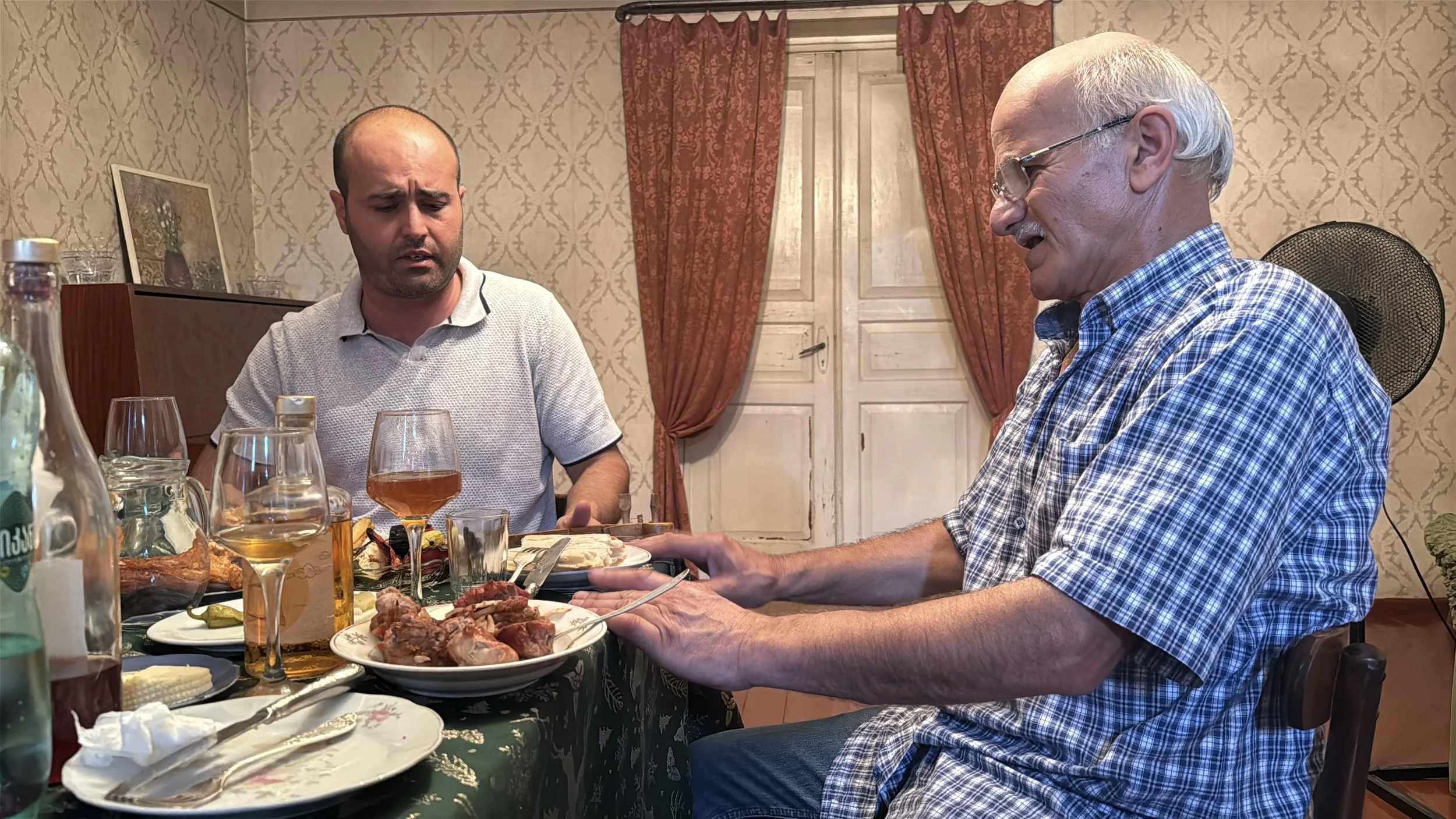
Supra feast with a Georgian family
Guest Houses
In villages, I often stayed in family-run guesthouses, which typically included dinner and breakfast. These stays were a highlight of the trip with hearty meals, generous portions, and warm hospitality. Guesthouses also provided opportunities to sleep indoors, shower, charge devices, and occasionally do small resupplies and laundry.
Most of these guesthouses, even the small family-owned ones, were available on Booking.com.
🛖 New Huts
As the Transcaucasian Trail continues to grow into a world-class long-distance route, trail developers and local partners are adding infrastructure to support hikers. In Georgia, several mountain huts and high-alpine shelters are being built or have recently been completed at key locations, including spots like the Kvakhidi meadows, Khidotani Ridge, and near Tanie Lake above existing trail corridors. These huts provide welcome refuge from the weather-exposure and make long sections between villages more manageable, especially in changeable conditions typical of the Caucasus high country.
While the trail is still under development and many stretches remain wild and unmarked, these new huts signal the growing trail-building momentum around the TCT — blending traditional backcountry adventure with emerging support for future thru-hikers.
Newly built mountain huts currently (as of summer 2025) are unlocked and offer basic shelter to backpackers. These huts are minimal as they’re still under construction, but they make certain stretches more accessible and provide valuable protection during storms. As of 2025, they are still under construction and do not yet include water, so you will need to carry it with you. In the future, likely late 2026 or 2027, these will become paid refuges that will likely need to be booked in advance.
Mountain hut still under construction
🎒Resupply
Resupply required flexibility. Some small villages have tiny shops, but selection is limited and inconsistent. I typically carried four to five days of food at a time, restocking whenever I reached a larger town or village with a more reliable store. Simple staples—bread, cheese, noodles, chocolate, cookies, and instant soups—formed the backbone of my trail diet.
If you’re planning to hike sections of the TCT in Georgia, it’s best to assume that food availability will be unpredictable and plan conservatively. Carrying an extra meal or two is a smart buffer.
🍲 Food on the Transcaucasian Trail
Food was one of the most memorable parts of hiking the Transcaucasian Trail in Georgia. In fact, the food alone is reason enough to come here.
In villages, meals usually came in the form of home-cooked guesthouse dinners and breakfasts, which were generous, filling, and deeply comforting after long days on trail. Some of the dishes I saw again and again (and never got tired of):
A typical Georgian dinner
Khinkali – Georgian dumplings filled with meat or potato
Khachapuri – iconic cheese-filled bread (in many regional styles)
Badrijani Nigvzit – eggplant rolls stuffed with walnut-garlic paste
Tomato & cucumber salad with walnut paste – made with some of the best tomatoes I’ve ever eaten
Mtsvadi – pork shish kebab grilled over grapevine wood
Kharcho – rich beef and walnut soup
Beet and carrot salads with garlic and herbs
Smoked mountain cheese and fresh local cheeses
Wine made in clay pots underground called Qvevri
Georgia is also widely considered the birthplace of wine, with an 8,000-year-old winemaking tradition that predates most modern wine cultures. Wine is often made using the ancient qvevri method—fermented in large clay vessels buried underground—and many families still produce their own wine at home. Glasses of homemade red or amber wine appeared regularly at guesthouse tables, often followed by generous pours of chacha, Georgia’s potent grape brandy.
On trail, my food strategy was simple and flexible. I resupplied whenever I could and carried four to five days of food at a time, sometimes more depending on the section ahead. Small village shops—when they existed—usually stocked only basic items: pasta, instant noodles, biscuits, chocolate, crackers, canned goods, and occasionally cheese or sausage. Selection varied widely, and I learned not to count on finding anything specific.
Because of this, I treated every resupply opportunity seriously and carried extra calories when leaving larger towns. If you have dietary restrictions or specific preferences, it’s wise to bring specialty items from bigger cities. Occasional top-ups were available at roadside stalls serving hot items or some guesthouses will pack you a lunch for a small fee. Some sections of the trail can be hiked guesthouse to guesthouse, so it really depends on how remote you’d like to be and what your on-trail budget is.
Some of my favorite memories from Georgia involve sitting at a guesthouse table after a long day, sharing delicious food, strong wild-herb tea, wine, and stories with people who live in places most travelers will never see.
💰 Food & Accommodation Costs in Georgia
One of the great things about hiking in Georgia is how affordable it is compared to many long-distance hiking destinations in Europe and North America. Even in remote mountain regions like Svaneti, Tusheti, and Khevsureti, food and accommodation remain relatively inexpensive.
🏠 Guesthouses
Family-run guesthouses are common in villages and usually include dinner and breakfast with your stay.
Typical price: 40–80 GEL per night
(approximately $15–30 USD)Usually includes: bed, hot shower, and often dinner and breakfast
Some very basic homestays can be slightly cheaper, while more established guesthouses in popular villages may be at the higher end of that range.
🏕 Wild Camping
Wild camping is generally free and widely practiced in Georgia’s mountains, making it easy to keep costs low on trail.
Cost: 0 GEL / $0 USD
🍽 Food
Eating local Georgian food is affordable, filling, and high in calories—perfect for hikers.
Simple restaurant meal or guesthouse dinner: 15–30 GEL
(about $5–11 USD)Bakery items, khachapuri, khinkali, soups, salads: often 5–15 GEL
($2–5 USD)Small shop resupply (snacks, noodles, bread, chocolate): 30–60 GEL
($11–22 USD) for a basic restock
If you rely mostly on guesthouse meals and simple shop resupplies, it’s very realistic to keep daily food costs under 50 GEL ($18 USD).
Bottom Line
For hikers combining wild camping with occasional guesthouse stays, Georgia is an excellent low-budget long-distance hiking destination. Expect to spend roughly:
40–100 GEL per day on food and accommodation
(approximately $15–37 USD per day)
Actual costs will vary based on how often you stay in guesthouses, how much you eat, and where you resupply, but overall Georgia remains one of the best-value mountain destinations I’ve experienced. As always, as tourism increases, prices do too, so consider adding a 10% buffer to your budget to be on the safeside.
🗓 When to Hike the Transcaucasian Trail in Georgia
The main hiking season for the Transcaucasian Trail in Georgia runs from late June through September, once high mountain passes have melted out and before early snowfall returns. I hiked in July and August, which offered long daylight hours, warm temperatures, and peak wildflower blooms.
Even in mid-summer, weather in the Caucasus is highly variable. I experienced hot, sunny days, sudden thunderstorms, heavy rain, and strong winds—sometimes all within the same day. Afternoon storms were common, especially at higher elevations, so I often aimed to be off exposed ridgelines earlier in the day.
July and August also bring insects, particularly in lower, wetter valleys like parts of Svaneti. Long sleeves, a head net, and repellent can make a big difference.
For most hikers, late June, July, August, and early September offer the best balance of snow-free terrain and manageable weather.
Wild camping beside a shepherd camp
💡 Tips for Future Hikers
Be comfortable with navigation and route finding—this is not a follow-the-blazes trail.
Download multiple GPX sources and keep offline maps.
Expect plans to change and build flexibility into your itinerary.
Carry extra food when leaving towns.
Prepare for solitude; it’s common to go days without seeing other hikers.
Start early on big ridge days to avoid afternoon storms.
Embrace the unfinished nature of the trail—imperfection is part of the experience.
Standing in front of White Lake near Juta
🌄 Final Reflections
Hiking sections of the Transcaucasian Trail in Georgia reminded me why I fell in love with long-distance hiking in the first place. Not because everything was easy or polished, but because it was raw, challenging, and deeply immersive.
There were days of bushwhacking, long climbs, and lots of uncertainty. But there were also quiet evenings in alpine meadows, unexpected kindness in mountain villages, and endless ridgeline views that made the effort feel worthwhile.
The TCT isn’t a trail you hike for comfort or convenience. It’s a trail you hike for discovery, of landscapes, cultures, and your own capacity to adapt. For me, that made it one of the most rewarding long-distance experiences I’ve had.
🔗 Resources for Hiking the Transcaucasian Trail in Georgia
If you’re planning to hike sections of the Transcaucasian Trail in Georgia, these resources were invaluable during my own planning and on-trail navigation:
🧭 Transcaucasian Trail Project
Transcaucasian Trail Association (Official Site):
https://transcaucasiantrail.orgAbout the Trail:
https://transcaucasiantrail.org/en/about/Vision & Philosophy:
https://transcaucasiantrail.org/en/about/vision-philosophy/
🗺 GPX Files & Route Planning
Transcaucasian Trail GPX Downloads:
https://transcaucasiantrail.org/en/hike/Trekking the Caucasus (routes, blogs, GPX, logistics):
https://www.caucasus-trekking.com/
📱 Navigation Apps
Gaia GPS
Google Maps (satellite view)
Mapy.cz
🏔 Regional Travel Info
Khevsureti Travel Guide (Wander-Lush):
https://wander-lush.org/khevsureti-itinerary-travel-tips/Georgia Tourism:
https://georgia.travel
🎥 My Transcaucasian Trail Videos
YouTube Channel:
https://www.youtube.com/channel/UCWwk87qlgWeS5v6V6zdh9aw
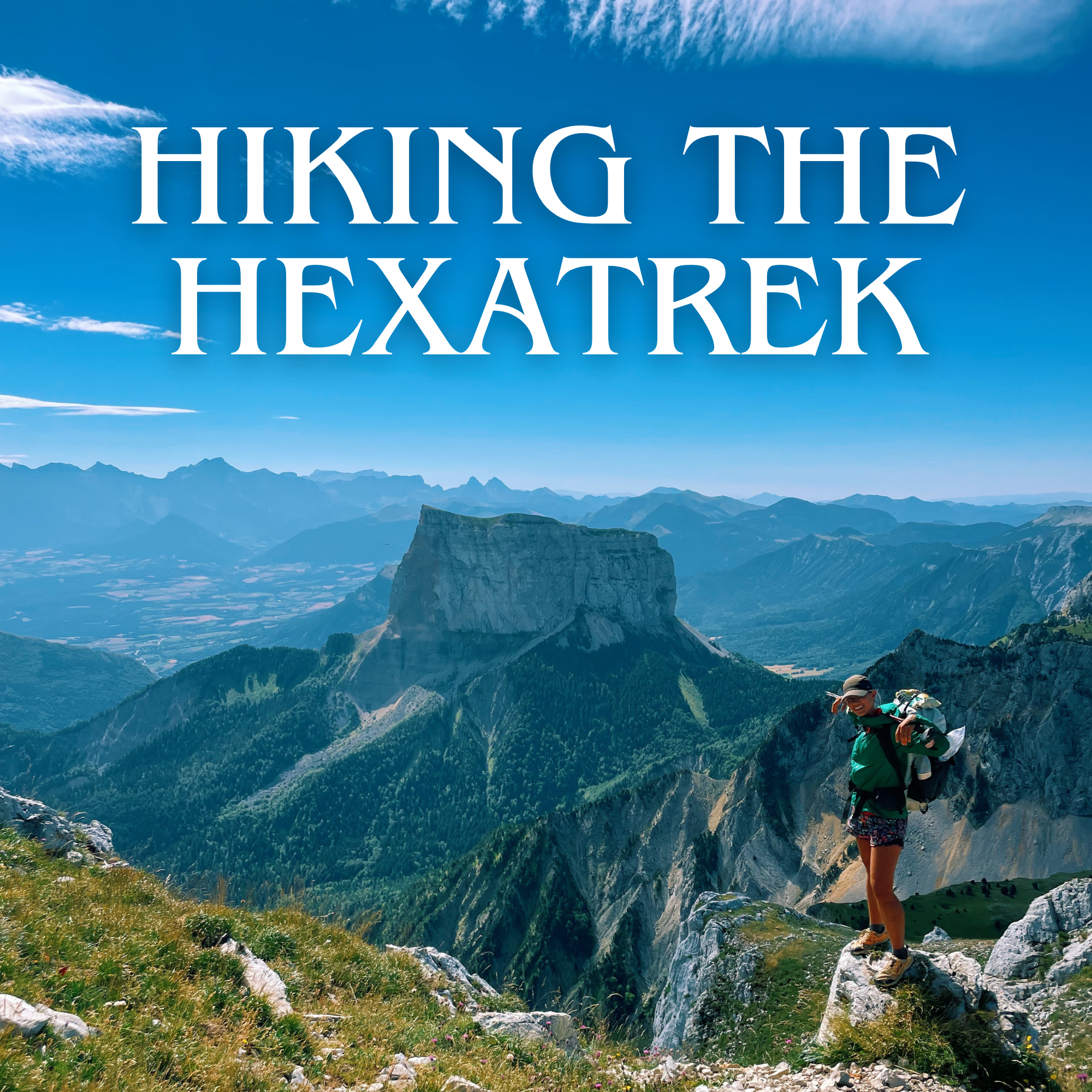
Everything you need to plan and successfully hike the Hexatrek — built by someone who actually did it.
If you’re thinking about hiking the Hexatrek, you’ve probably already realized one thing: there isn’t a lot of clear, reliable information out there.
This trail is still new, logistics can be confusing, and figuring it all out on your own can take weeks (or months).
That’s exactly why I created this guide.
I hiked the full 3,034 km Hexatrek in 2023 and became the first North American woman to complete the trail. This guide is everything I wish I had before I started — and everything you need to feel confident stepping onto the trail.
Inside, you’ll learn how to:
• Plan your route and understand each stage of the trail
• Get to the start and navigate your way across France
• Budget realistically and avoid running out of money mid-hike
• Pack the right gear (and avoid overpacking)
• Resupply efficiently and manage food on trail
• Find campsites, accommodation, and water sources
• Stay safe and prepared in unfamiliar terrain
• Physically and mentally prepare for a long-distance hike
• Understand trail culture, expectations, and what life on trail actually feels like
This isn’t just information — it’s clarity.
Instead of piecing together advice from forums, blogs, and scattered resources, this guide gives you a clear, structured plan so you can spend less time stressing and more time getting excited about your hike.
Who this is for:
This guide is for you if:
• You’re planning a Hexatrek thru-hike or section hike
• You want to feel prepared before you arrive
• You don’t want to learn everything the hard way
• You value real experience over generic advice
Over 100 pages of detailed information, maps, and photos to help you go from “can I do this?” to “I’m ready.”
Start planning your Hexatrek adventure today.
*This is a digital download